
M35 ready-mix
concrete
M35 is specified by structural engineers for very-severe exposure and high-load infrastructure — flyovers, industrial structures, and high-rise above G+10.
M35 mix design parameters
IS 456:2000 durability minimums for the very severe exposure class. Project-specific mix designs are signed off by our QC team.
Where M35 fits — and where it doesn't
Specifying the right grade saves money and avoids rework. Below is a quick guide based on IS 456 norms and our delivery experience in Prakasam district.
Use M35 for
- Flyover and overpass decks
- Bridge girders and pier caps
- Industrial heavy-machinery foundations
- High-rise above G+10 — columns and transfer beams
- Structures within 3 km of the coastline (very-severe exposure)
- Pre-cast tunnel segments
Don't use M35 for
- Where M30 suffices (uneconomical)
- Residential work below G+5
How we batch M35
Specified for very-severe exposure where structural elements face chlorides, sulphates, or freezing-thawing cycles. Mix design usually uses fly-ash or GGBS plus a superplasticizer to maintain workability at low w/c. Cube tests at 7, 14, and 28 days are standard, with acceptance per IS 456 sampling rules.
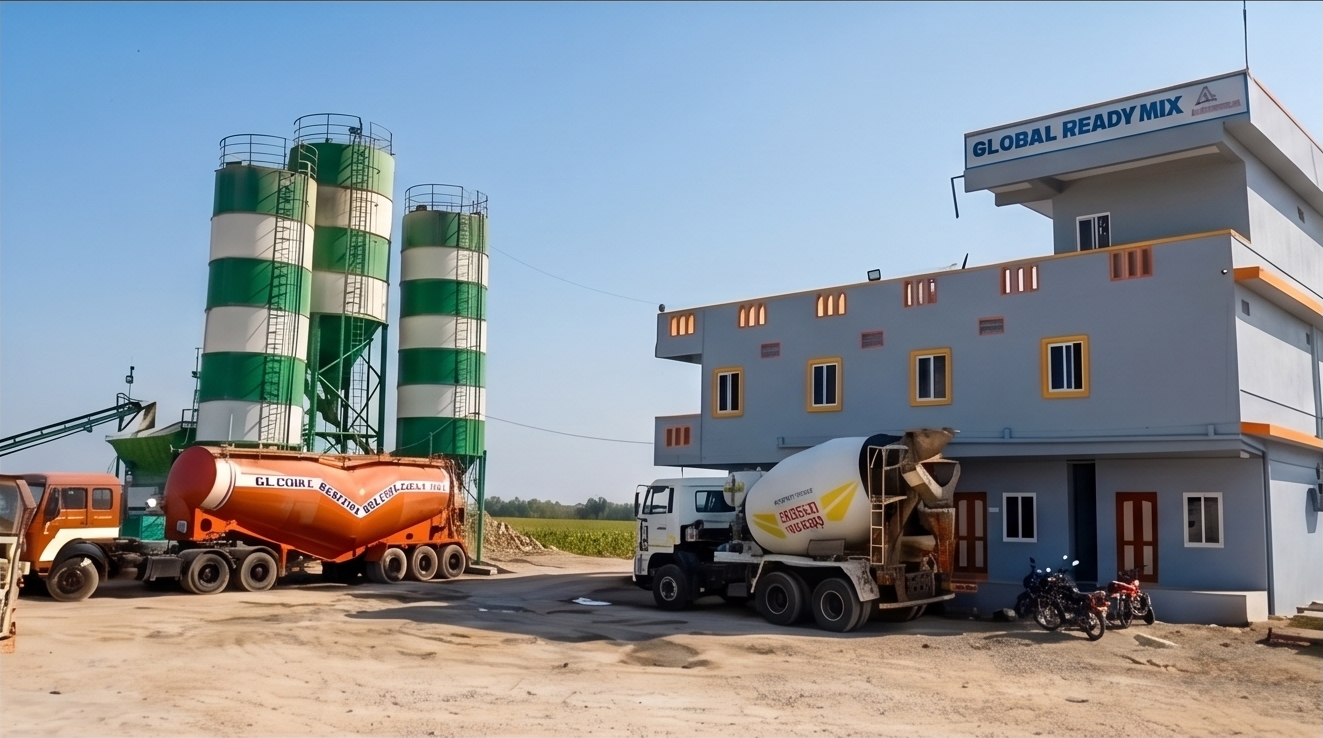
Every dispatch from our Mallavarappadu and Gundlapalli plants includes a batch slip with mix proportions and a 28-day cube test report — generated from the same load you receive. M35 is delivered in transit mixers and placed either by direct chute discharge or by line pump for upper-floor slabs, columns, and pours the truck can't reach. For projects above 50,000 m³, we can set up a dedicated batching plant on your site with a project-specific mix design and on-site QC lab.
Common questions about M35
Is M35 worth the extra cost over M30?
How is M35 different from M30 in mix design?
M35 delivery across Ongole and Prakasam district
We dispatch M35 ready-mix concrete to construction sites in Ongole and the wider Prakasam district from our Mallavarappadu and Gundlapalli plants. Tap any town for plant distance, transit time, and project-specific notes.