
M15 ready-mix
concrete
M15 is the strongest grade IS 456 still classifies as plain concrete — useful for small unreinforced footings, compound-wall plinths, and PCC layers heavier than M10 can carry. For new reinforced work, IS 456:2000 sets M20 as the minimum.
M15 mix design parameters
IS 456:2000 durability minimums for the mild (plain concrete only) exposure class. Project-specific mix designs are signed off by our QC team.
Where M15 fits — and where it doesn't
Specifying the right grade saves money and avoids rework. Below is a quick guide based on IS 456 norms and our delivery experience in Prakasam district.
Use M15 for
- Compound walls with light footings (no rebar in the footing)
- PCC layer below medium-load footings, raft mats, and column bases
- Pathway and driveway slabs, garage floors (unreinforced)
- Bedding for kerbs, channels, and inspection chambers
- Above-ground septic tank base slabs (where local code permits PCC)
- Small storage outhouse floors and pavers
Don't use M15 for
- New reinforced concrete — IS 456:2000 sets M20 minimum for Mild exposure RCC
- Multi-storey columns or long-span beams
- Water-retaining structures (use M30 or higher per IS 3370)
- Marine or coastal exposure
- Industrial floors with fork-lift or machinery load
How we batch M15
IS 456:2000 Table 5 raised the minimum RCC grade for Mild exposure to M20, so M15 is now best treated as a plain-concrete grade. Per IS 456 Table 5, plain concrete in Mild exposure needs ~220 kg/m³ cement; Moderate exposure ~240 kg/m³. Our standard M15 PCC mix runs about 250 kg/m³ with a 0.50 w/c ratio for a slightly stronger margin than the bare minimum.
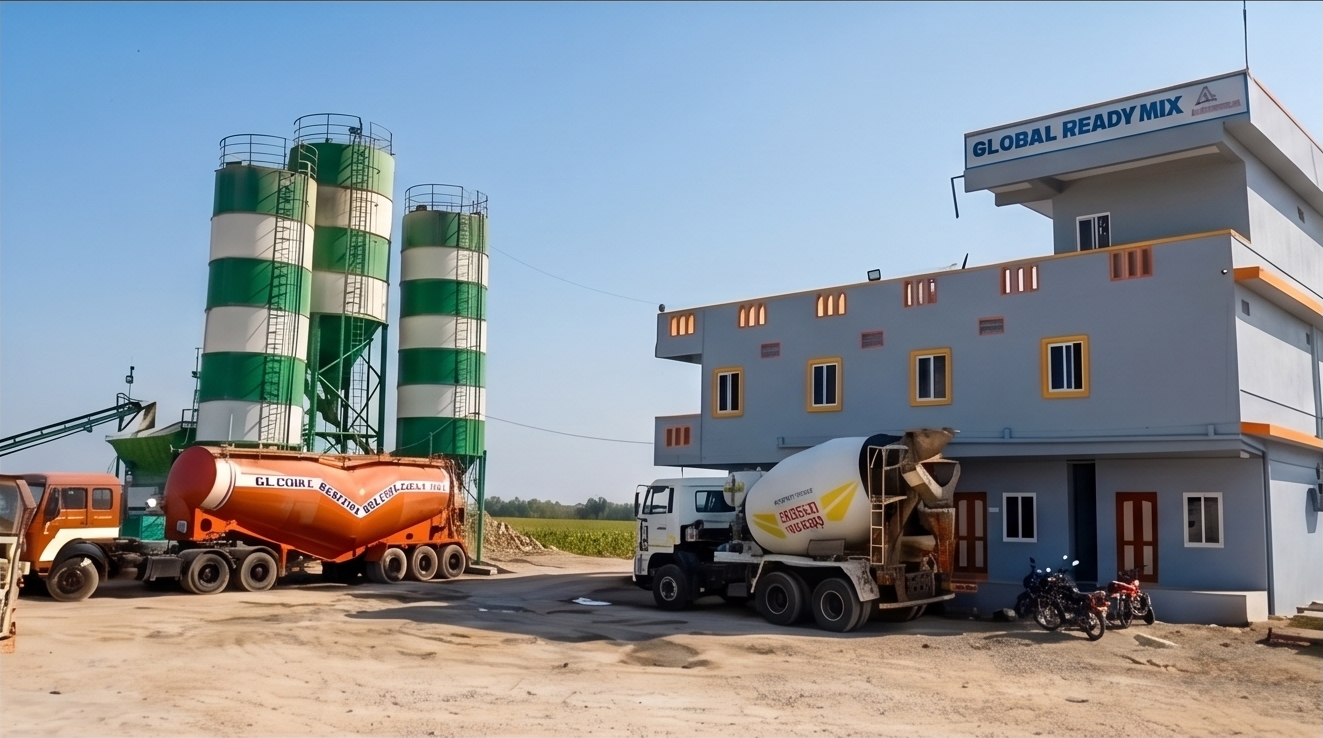
Every dispatch from our Mallavarappadu and Gundlapalli plants includes a batch slip with mix proportions and a 28-day cube test report — generated from the same load you receive. M15 is delivered in transit mixers and placed either by direct chute discharge or by line pump for upper-floor slabs, columns, and pours the truck can't reach. For projects above 50,000 m³, we can set up a dedicated batching plant on your site with a project-specific mix design and on-site QC lab.
Common questions about M15
Can I use M15 for a residential first-floor slab?
What is M15 still used for?
Is M15 cheaper than M20?
M15 delivery across Ongole and Prakasam district
We dispatch M15 ready-mix concrete to construction sites in Ongole and the wider Prakasam district from our Mallavarappadu and Gundlapalli plants. Tap any town for plant distance, transit time, and project-specific notes.